Unlock the Editor’s Digest for free
Roula Khalaf, Editor of the FT, selects her favourite stories in this weekly newsletter.
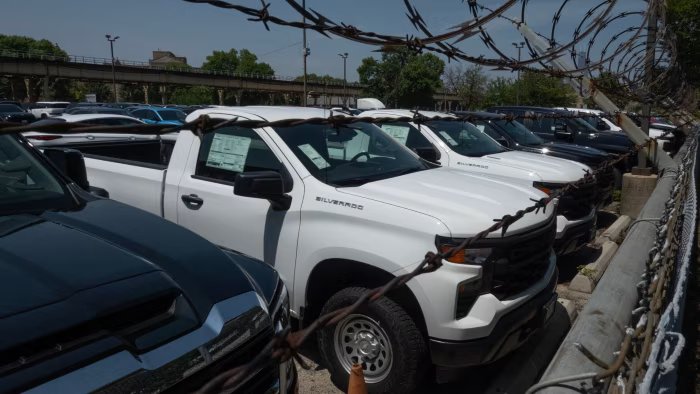
General Motors has predicted a smaller hit from tariffs than previously feared as it raised its annual profit guidance.
The US carmaker said on Tuesday that it now expects a hit from US tariffs of up to $4.5bn, compared with its earlier forecast of $5bn, and that it would pass on more costs to consumers through price increases.
As a result, it forecasted annual adjusted operating profit of between $12bn and $13bn, compared with its previous range of between $10bn and $12.5bn.
GM remains exposed to US President Donald Trump’s trade war, with a large manufacturing footprint in South Korea, as well as Mexico and Canada, for vehicles that are sold in the US.
But the company said some of the tariff burden would be eased by relief measures for the industry announced by Trump.
GM said it would also raise the price of its vehicles in North America by up to 1 per cent year-on-year.
The revision came even as the group last week warned of a $1.6bn charge to scale back its electric vehicle production following the cancellation of tax credits for EV purchases in the US.
In a letter to investors, chief executive Mary Barra said the company was reassessing its EV capacity and manufacturing footprint in light of an expected slowdown in EV adoption.
“By acting swiftly and decisively to address overcapacity, we expect to reduce EV losses in 2026 and beyond,” she added.
Consumers rushed to buy electric cars before the tax credits expired on September 30, creating a temporary boom that doubled GM’s EV sales to a quarterly record of 66,501.
But many carmakers, including Ford, are anticipating a sharp slowdown in EV sales due to the expiry of the tax credits, and the proposed rollback in rules to cut vehicle emissions.
GM reported adjusted earnings of $3.4bn before interest and tax in the third quarter, down 18 per cent year on year, while revenues remained mostly flat at $49bn. Adjusted operating profits were higher than the average analyst estimate for $2.7bn, according to Visible Alpha.